Why VPN Traffic Is Quietly Destroying Affiliate Campaign Performance
Most affiliate managers don’t notice VPN fraud immediately. At first, campaigns look healthy. Click volume increases, leads start flowing, and affiliates continue scaling traffic.
Then the problems begin.
Advertisers complain about lead quality. Approval rates suddenly drop. Chargebacks increase. And eventually everyone starts asking the same question: “Where is this traffic actually coming from?”
In many cases, the answer is simple: anonymous VPN and proxy traffic.
Over the last few years, VPN usage has exploded across affiliate marketing, especially in high-risk verticals like crypto, gambling, finance, sweepstakes, and SaaS offers.
The bigger issue is that VPN traffic rarely comes alone. It’s usually connected to:
- fake registrations
- duplicate accounts
- bot-assisted conversions
- low-quality incentive traffic
- multi-account abuse
A lot of networks still rely on outdated filtering systems that only block obvious datacenter IPs. That approach no longer works.
Modern fraud traffic is smarter now. Fraudsters rotate residential proxies, use mobile VPN networks, and create traffic patterns that look surprisingly normal.
That’s why real-time VPN detection has become essential for modern traffic platforms.
At 24Scan, we’ve seen situations where a single bad traffic source generated thousands of fake leads while appearing completely legitimate on the surface. The clicks looked real. The GEO matched. Even session behavior looked normal.
But underneath it all, the traffic was routed through anonymous proxy networks designed to bypass detection systems.
This is where traffic intelligence becomes more important than simple IP blocking.
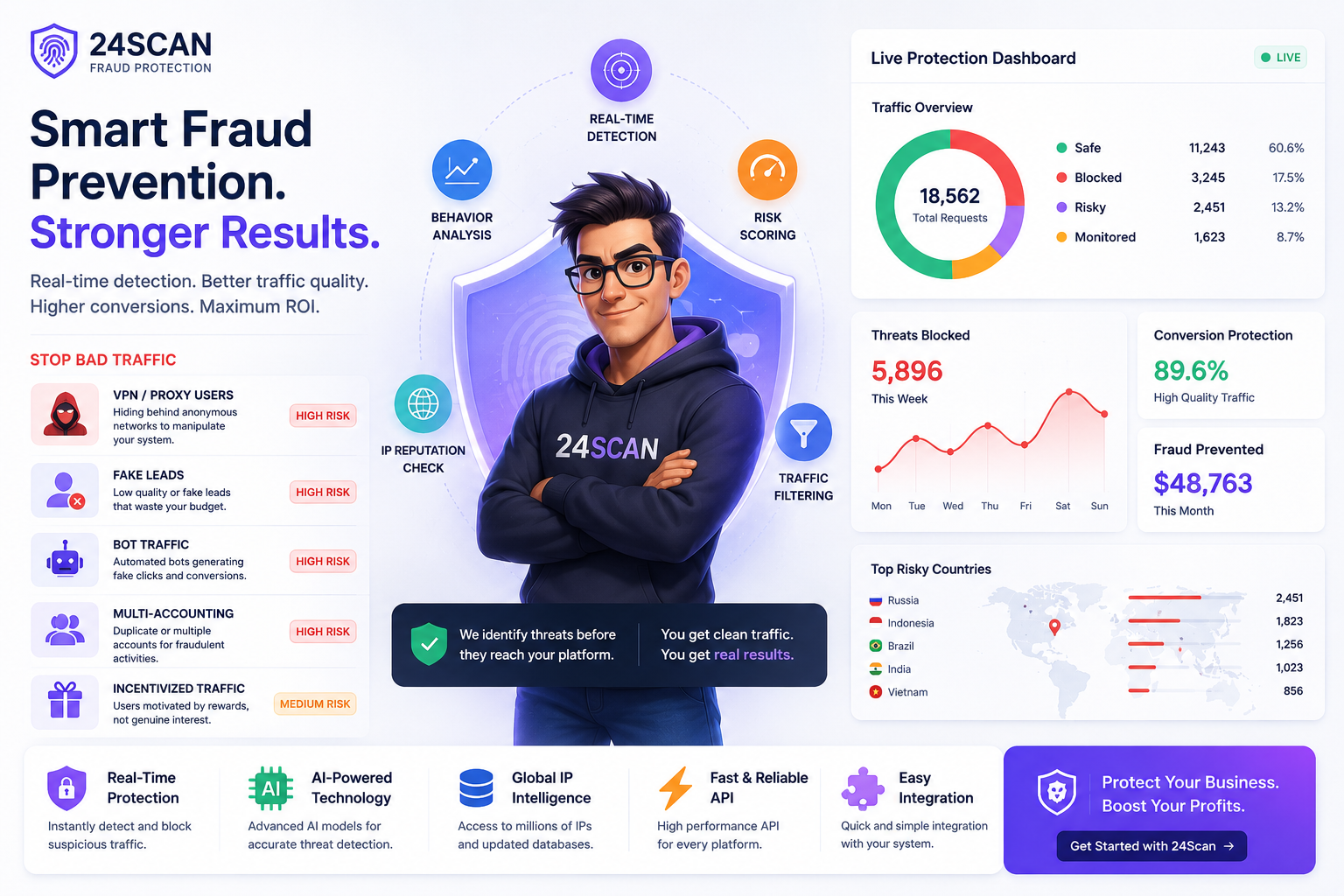
A modern VPN detection system needs to analyze:
- IP reputation
- proxy behavior
- VPN signatures
- ASN patterns
- risk scoring
- behavior anomalies
Without that visibility, networks end up paying for traffic that never had real conversion intent in the first place.
And the financial damage adds up fast.
For CPA networks, low-quality VPN traffic doesn’t just hurt advertisers. It damages long-term relationships, reduces trust, and makes scaling harder for legitimate affiliates too.
That’s why more platforms are starting to move toward proactive fraud prevention instead of reacting after campaigns fail.
Because by the time approval rates collapse, the damage is usually already done.